
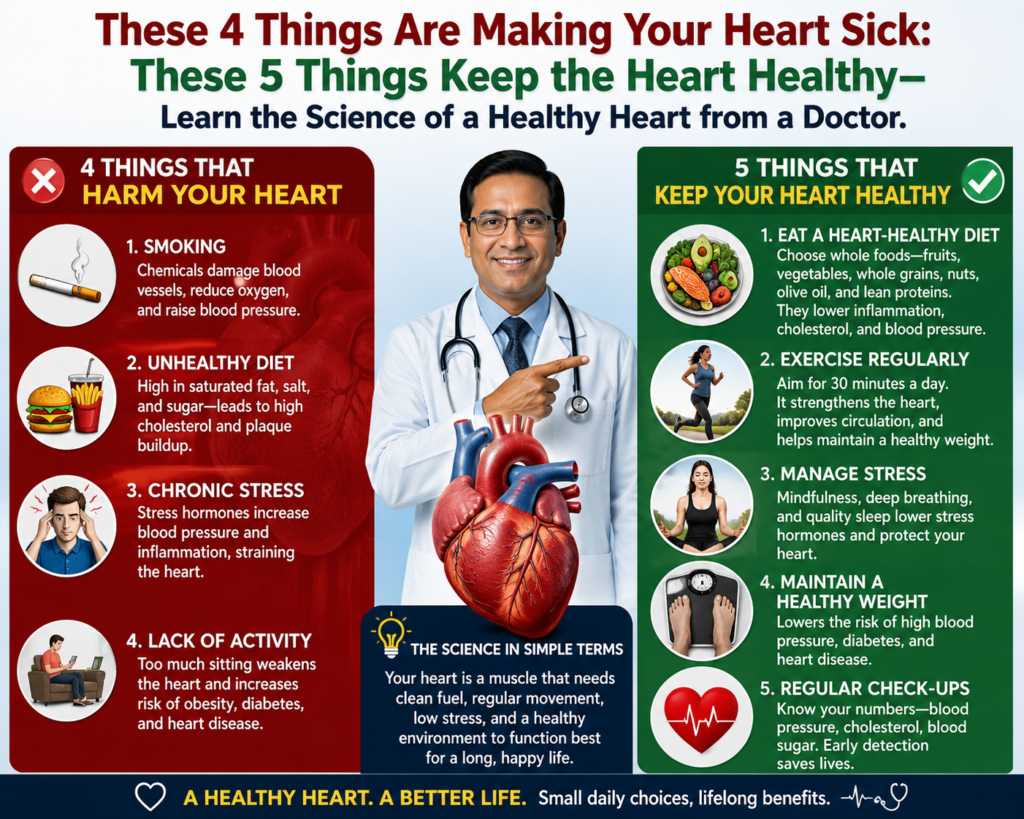
These 4 Things Are Making Your Heart Sick: These 5 Things Keep the Heart Healthy—Learn the Science of a Healthy Heart from a Doctor.
How Does the Heart Work?
The function of the two upper chambers—known as the atria—is to collect blood. The right atrium receives deoxygenated blood returning from the body.
The left atrium receives oxygenated blood coming from the lungs. This blood then flows into the lower chambers, known as the ventricles.
The function of the ventricles is to pump the blood forcefully. The right ventricle sends the blood to the lungs, while the left ventricle pumps blood to the entire body.
Question: Why does the heart fall ill?
Answer: Over time, the strain on the heart’s blood vessels and muscles increases.
Consuming excessive fried foods and salt leads to the accumulation of fat within the arteries. This narrows the passageway for blood flow, causing blood pressure to rise.
Chronic stress, lack of sleep, and low levels of physical activity elevate blood pressure and blood sugar levels, thereby placing an additional burden on the heart.
Smoking and alcohol consumption damage the heart’s blood vessels.
Age, genetic factors, and underlying medical conditions further increase the risk.
Fundamentally, heart health depends on these five key factors.
Understand all the points in detail:
What do you eat throughout the day?
The main reason for heart disease is what and how we eat. Excessive oily and spicy food increases bad cholesterol, which accumulates in the heart’s arteries. How does a poor diet cause heart disease?
How much do you move your body?
The amount of physical activity you engage in has a direct impact on your heart health:
A sedentary lifestyle—characterized by working while seated for long periods, minimal movement, and a lack of exercise—gradually compromises heart health.
When the body remains inactive, calories are not burned, and fat begins to accumulate. This leads to an increase in body weight, blood pressure, and blood sugar levels.
When physical activity is limited, the heart is forced to work harder to pump blood. This places an increased workload on the heart.
Engaging in regular walks, climbing stairs, or performing light exercises strengthens the heart muscles and improves blood circulation.
How soundly do you sleep at night?
This has a direct impact on your heart health.
During sleep, the body repairs itself, and all organs—including the heart—get a chance to rest.
It is during this time that hormones are balanced, blood pressure comes under control, and inflammation in the blood vessels subsides.
Getting adequate, quality sleep leads to a reduced release of stress hormones, thereby lowering the workload on the heart.
When sleep is insufficient, the body remains in “alert mode.” This results in elevated blood pressure, increased heart rate, and heightened inflammation.
What is your relationship with cigarettes, alcohol, caffeine, and nicotine?
Cigarettes, alcohol, caffeine, and nicotine directly affect heart health:
The nicotine present in cigarettes constricts blood vessels, causing both heart rate and blood pressure to rise. This forces the heart to work much harder.
Alcohol consumption weakens heart muscles and can lead to an irregular heart rhythm.
Excessive caffeine intake carries the risk of restlessness, rapid heartbeat, and elevated blood pressure.
Illicit drugs can damage the heart’s electrical system.
Long-term consumption of these substances multiplies the risk of heart attacks, strokes, and heart failure.
How much do beautiful relationships, love, and happiness feature in your life—in other words, what is your stress level?
The stronger the relationships, love, and emotional support in your life, the healthier your heart tends to be.
Chronic stress, loneliness, and negative emotions increase the levels of stress hormones in the body.
This leads to elevated blood pressure, increased heart rate, and inflammation, placing an additional strain on the heart.
Prolonged periods of high stress can cause arteries to stiffen, thereby increasing the risk of a heart attack.
Conversely, healthy relationships, a sense of belonging, and happiness keep the mind calm. This reduces stress, improves sleep quality, and allows the heart to rest. Emotional balance and happy relationships are just as essential for heart health as proper diet and exercise.
Question: Is “Sudden Cardiac Arrest” truly sudden?
Answer: Although the name “Sudden Cardiac Arrest” might suggest that everything happens abruptly, in most cases, it is not entirely sudden. The body actually provides various warning signs beforehand:
Recurrent chest heaviness
Rapid fatigue
Shortness of breath
Dizziness
Restlessness
Sleep disturbances
Irregular heart rate
These signs indicate that the heart is under increasing strain or that its electrical system is malfunctioning. However, due to the fast pace of modern life, work-related stress, and being bogged down by responsibilities, we often overlook these warning signs.
If these symptoms are recognized in a timely manner and appropriate medical check-ups are conducted, the risk of sudden cardiac arrest can be averted to a significant extent.
These 3 Habits Are Taking a Heavy Toll on Young Hearts:
Junk Food Proves Dangerous: The craze for junk food and deep-fried items has surged significantly among today’s youth. This leads to a rapid increase in calorie intake and “bad” cholesterol levels in the body, which directly blocks the heart’s arteries and creates conditions ripe for a heart attack.
Smoking and Alcohol: A Slow Poison: Driven by peer influence, the habits of smoking and drinking alcohol are pushing young people toward “cardiovascular diseases” (heart ailments). Alcohol consumption causes a sudden spike in blood pressure, which has a direct adverse effect on blood vessels. This habit weakens the heart day by day, and when a heart attack strikes, there is often no opportunity to recover.
Excessive Workload and Rising Stress: Due to mounting pressure related to careers and work, young people are grappling with mental stress, which is directly compromising their heart health.
Doctor’s Advice: 5 Measures to Keep Your Heart Safe
Regular Check-ups: If there is a history of heart disease in your family, ensure you undergo regular check-ups for blood pressure, blood sugar, and cholesterol levels.
Healthy Diet: Increase your intake of fruits and green vegetables. Minimize your consumption of oil, spices, fast food, and salt.
Daily Exercise: Walk for at least 30 to 45 minutes each day; make yoga or Pranayama an integral part of your daily routine.
Steer Clear of Bad Habits: Immediately quit life-threatening habits such as smoking, tobacco use, and alcohol consumption.
Protection Against Stress and Pollution: Keep your mental stress under control, and wear a mask when stepping outdoors to protect yourself from air pollution.