
Workout Safety Tips for Summer: Do Not Ignore These 9 Warning Signs—Take These 11 Essential Precautions, Says the Doctor
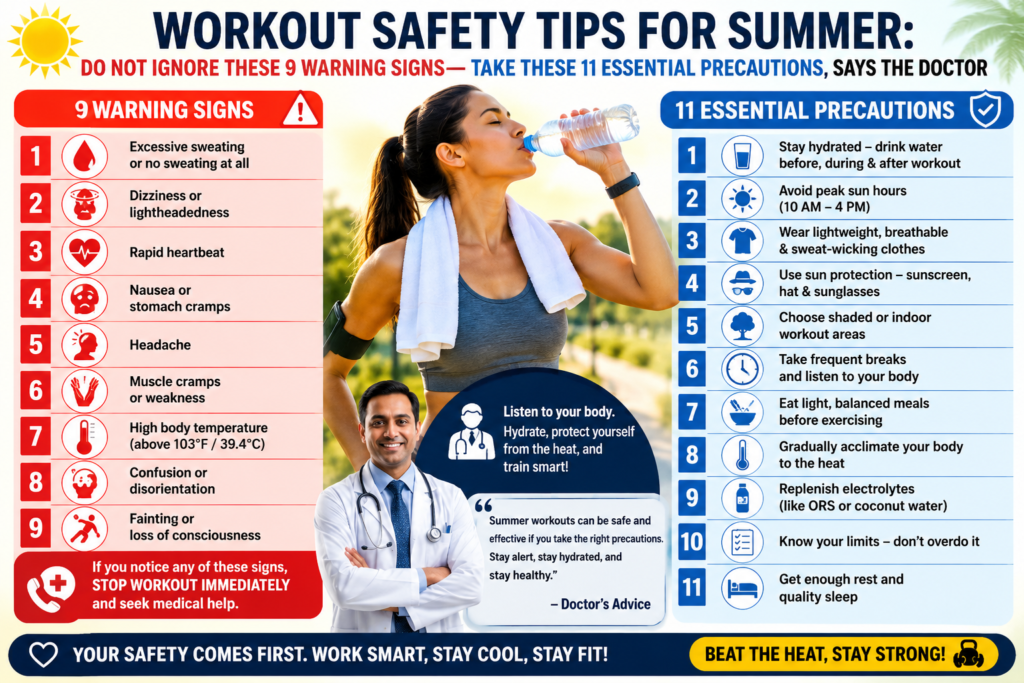
Maintaining a fitness routine during the summer months can be challenging. During this season, excessive sweating, rapid fatigue, and an increased risk of dehydration make working out particularly difficult. Consequently, some people avoid exercise altogether, while others work out without taking necessary precautions—both of which can be detrimental to one’s health.
Given these circumstances, it is essential to adjust your workout timing, methods, and diet to suit the weather conditions. With the right information and a few simple precautions, we can stay fit and energetic even during the summer.
Therefore, on ‘https://fitnesspowerlife.com/wp-admin/’, today we discuss tips for safe summer workouts. We will also explore:
What is the best time to work out during the summer?
What precautions should be taken while exercising in the heat?
Question: What is the best time to work out during the summer?
Answer: The ideal time to work out during the summer is between 5:00 AM and 8:00 AM, or after 6:00 PM in the evening.
During these times, the temperature is lower, which places less physical stress on the body.
A morning workout provides a sense of freshness, whereas an evening workout helps alleviate the fatigue accumulated throughout the day.
One should avoid working out in the afternoon, as this is when the heat is at its peak; consequently, the risk of heat stress, dehydration, and heatstroke increases manifold.
Question: Why can working out during the afternoon be risky?
Answer: During the summer, temperatures are significantly higher in the afternoon, causing the body to overheat rapidly. This can lead to health issues such as heatstroke, dizziness, vomiting, and weakness. Excessive sweating can also deplete the body’s water and electrolyte levels—a condition that can develop into a serious medical emergency. Therefore, it is advisable to avoid working out during the afternoon hours in the summer.
Question: What should the workout schedule be during the summer season?
Answer: A workout schedule during the summer should be flexible. To achieve this, keep the following points in mind:
Workout only during the morning or evening hours.
Workout 4–5 days a week.
Keep each session to 30–45 minutes.
Incorporate light cardio (walking, jogging).
Maintain a balance between strength training (muscle strength) and stretching (flexibility).
Take breaks at regular intervals.
Set aside 1–2 days for rest and recovery.
Question: Should the duration of workouts be reduced during the summer?
Answer: Yes, it is advisable to keep workout sessions slightly shorter during the summer months. A 30–45 minute session is sufficient. Working out for excessive periods can lead to dehydration and fatigue. Therefore, focus on quality rather than duration.
Question: What precautions should be taken while working out during the summer?
Answer: When exercising in the summer, it is crucial to keep your body cool and hydrated. Start gradually and avoid high-intensity workouts.
Question: What should one eat and drink before and after a workout during the summer?
Answer: The body tends to dehydrate rapidly during a workout; therefore, proper nutrition is crucial. Before exercising, consume light, easily digestible, and energy-boosting foods to keep your body active. Conversely, after your workout, focus on protein and hydration to aid the body’s recovery.
It is beneficial to consume one medium-sized banana and 4–5 soaked almonds half an hour before your workout.
Question: Why should one avoid high-intensity workouts during the summer?
Answer: High-intensity workouts cause the body’s temperature to rise rapidly, which can lead to a risk of overheating.
During such workouts, excessive sweating occurs, potentially resulting in a depletion of the body’s water and essential electrolytes.
This can lead to complications such as dehydration, dizziness, heat exhaustion, heatstroke, and muscle cramps.
High-intensity exercise places additional strain on the heart and leads to rapid fatigue.
Therefore, it is advisable to engage in low-intensity workouts during the summer months.
Question: What type of clothing should be worn while working out in the summer?
Answer: For workouts, wear lightweight, loose-fitting, and breathable clothing. Opt for light-colored garments rather than dark ones, as this allows sweat to evaporate easily and prevents the body from overheating.
Question: Which physical warning signs should not be ignored while working out in the summer?
Answer: If you experience dizziness or excessive sweating during a workout, these warning signs should not be ignored.
Questions and Answers Regarding Workouts in the Summer
Question: Is it advisable to work out on an empty stomach?
Answer: No. Working out on an empty stomach during the summer can lead to issues such as weakness, dizziness, and energy depletion. Therefore, it is best to consume a light snack about half an hour before your workout.
Question: How much water should one drink before, during, and after a workout?
Answer: Drink 1–2 glasses of water before your workout. During the workout, continue to sip small amounts of water every 15–20 minutes. Be sure to drink another 1–2 glasses of water shortly after your workout to ensure your body remains hydrated.
Question: Is water alone sufficient, or are electrolytes also necessary?
Answer: Yes, it is essential to consume electrolytes during summer workouts to replenish lost salts and minerals.
Question: Is it safe to work out every day during the summer?
Answer: You can perform light to moderate workouts daily, but avoid overloading your body. It is crucial to take 1–2 rest days per week to allow for proper recovery.
Question: Is it better to work out at home rather than at the gym during the summer season?
Answer: If the gym lacks adequate cooling and ventilation, working out at home can be a safer and more preferable option.
Question: Is it safer to work out in an air-conditioned or cool environment?
Answer: Yes, working out in a cool and well-ventilated space prevents the body from overheating.
Question: Is it appropriate to drink water while working out in the heat?
Answer: Absolutely. Drinking water during a workout is essential; it prevents dehydration and helps keep the body functioning optimally. है।
I was struggling to find a site that lets me jump right into my favorite games without any hassle. This one makes the login process so simple and secure. I love how quickly I can deposit and start playing. Highly recommended for anyone who values convenience and fast payouts bet711login