
Rising Diarrhea Cases This Summer: Do Not Ignore These 12 Symptoms; Avoid Eating These 8 Foods—Get Prevention Tips from a Doctor.
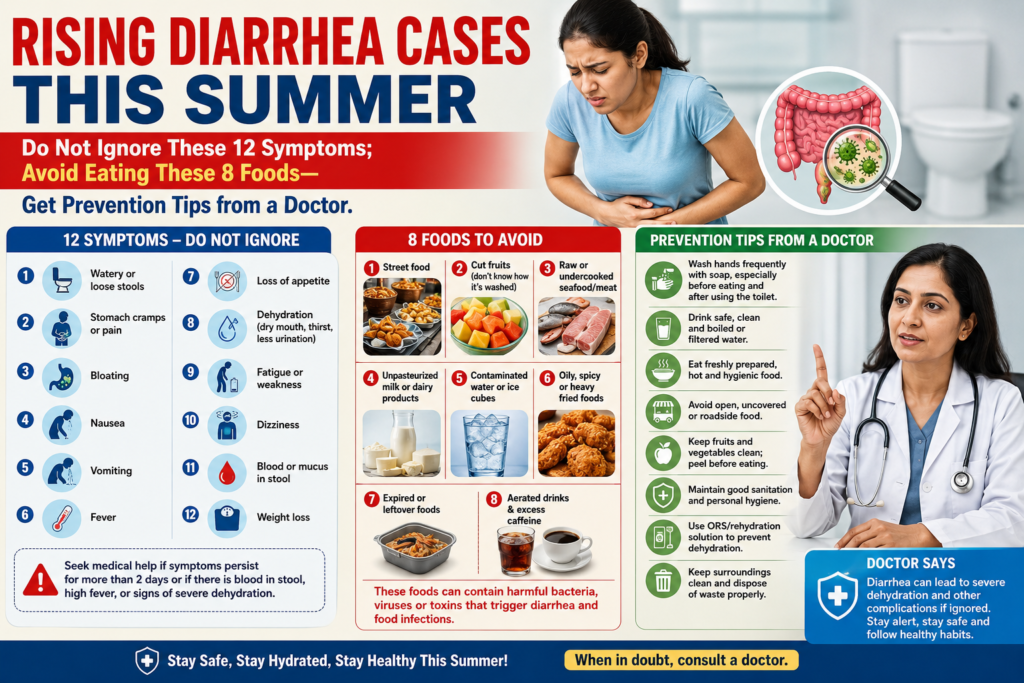
As temperatures rise in summer, stomach-related problems increase. The most common problem is diarrhea.
Recurrent diarrhea can lead to a significant loss of water and essential minerals. This can lead to dehydration, weakness, and, in severe cases, hospitalization.
Diarrhea can be even more dangerous for children. According to a study published in the National Library of Medicine, more than 158,000 children aged 1-6 years die from diarrhea each year in India.
Therefore, today on ‘fitnesspowerlife.com’, we will discuss diarrhea. We will also learn about:
Why does diarrhea occur?
Who is at higher risk?
What should be done to prevent diarrhea?
Question: What is diarrhea?
Answer: Diarrhea is a health condition characterized by frequent loose bowel movements throughout the day.
It is typically caused by bacterial or viral infections, the consumption of contaminated food or water, poor hygiene, or food poisoning.
During this condition, the body rapidly loses water and electrolytes (such as sodium and potassium).
This increases the risk of weakness, dizziness, and dehydration.
Question: Why do cases of diarrhea increase during the summer?
Answer: High temperatures cause bacteria and viruses to multiply rapidly. As a result, food and beverages spoil quickly. Food left exposed, cut fruits, contaminated water, and street food are common sources of infection.
Question: What are the early and severe symptoms of diarrhea that are crucial to recognize?
Answer: The initial symptoms of diarrhea may be mild, but if left unattended, they can become severe.
Now, let’s understand the reasons behind this:
Children’s bodies dehydrate rapidly.
The recovery process slows down in the elderly.
Infections spread more quickly in people with weak immunity.
Consuming outside food increases the risk of food-borne infections.
Question: Why does the risk of dehydration increase during diarrhea, and how dangerous can it be?
Answer: The risk of dehydration rises due to the depletion of water and essential minerals from the body. It is crucial to understand the following:
Why does the risk of dehydration increase?
Frequent loose motions lead to a loss of water from the body.
Additionally, electrolytes (such as sodium and potassium) are also flushed out.
Fluid depletion is further exacerbated if vomiting occurs.
Essentially, the body is losing more fluid than it is taking in.
How dangerous can this be?
Blood pressure may drop.
Kidney-related complications may arise.
Urination frequency may decrease or cease entirely.
Heart rate may become rapid or irregular.
Dizziness or fainting may occur.
It can be life-threatening for young children and the elderly.
When is the condition considered serious?
If one experiences extreme weakness or lethargy.
If urination frequency decreases or stops.
If the eyes and cheeks appear sunken.
If there is frequent vomiting.
If there is a high fever.
If there is bleeding accompanying the diarrhea.
Question: What should be the immediate course of action at home when suffering from diarrhea?
Answer: In such a situation, pay special attention to the following points.
Question: What steps should be taken to keep the body hydrated during diarrhea?
Answer: Follow these measures:
Consume small amounts of fluids every 10–15 minutes.
ORS (Oral Rehydration Solution) is the most effective remedy.
Coconut water and buttermilk are also beneficial.
Avoid sugary drinks and caffeine.
It is better to consume fluids in small quantities rather than drinking a large amount of water all at once.
Question: Which foods should be eaten, and which should be avoided, when suffering from diarrhea?
Answer: When you have diarrhea, the most important thing is to observe certain dietary restrictions alongside taking your medication.
Question: What lifestyle-related precautions are necessary to prevent diarrhea during the summer season?
Answer: Please observe the following precautions:
Always drink boiled or filtered water.
Maintain proper hygiene.
Wash your hands with soap before eating and after using the toilet.
Avoid eating cut fruits or food that has been left uncovered.
Store food at the appropriate temperature.
Do not consume stale food.
Carry a bottle of water and ORS (Oral Rehydration Solution) with you while traveling outdoors.
Question: What steps should be taken to protect children and the elderly from diarrhea?
Answer: Take the following measures:
Ensure they consume water and fluids regularly.
Strictly avoid giving them outside food or stale meals.
Provide them with fresh, light, home-cooked food.
Pay immediate attention to the early signs of dehydration.
Consult a doctor if there is persistent vomiting or weakness.