
Could You Have a Magnesium Deficiency? Doctors Explain Why It Is Essential for Your Nerves, Muscles, and Heart.
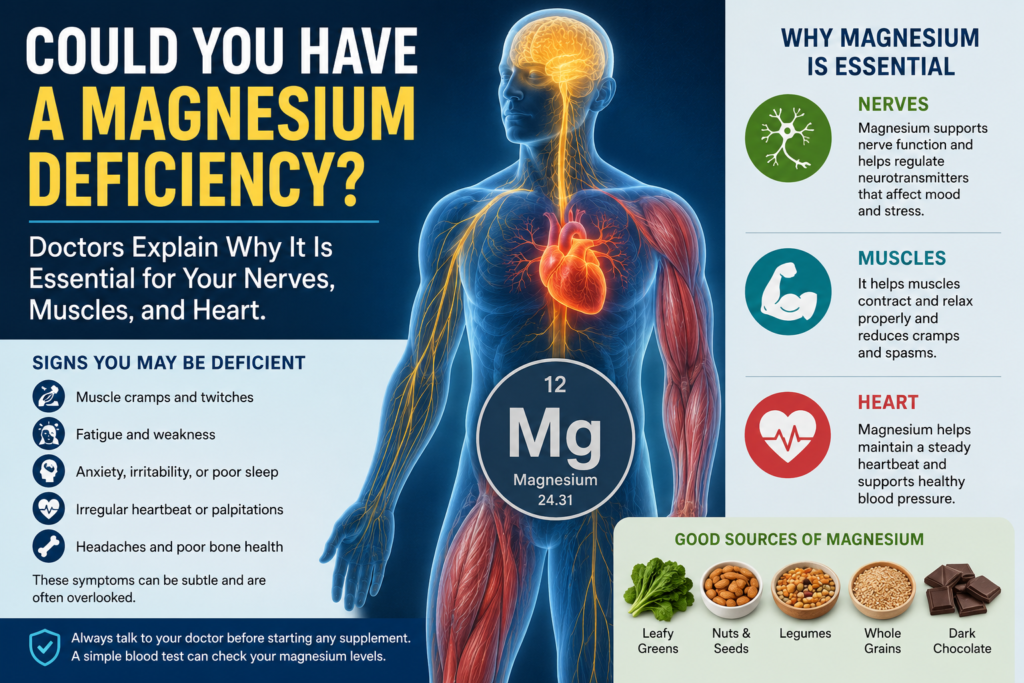
If you often feel tired, have trouble sleeping, or experience muscle strains after even a little physical activity, or feel anxious, or have frequent headaches, this could be a sign of magnesium deficiency.
Magnesium is a vital mineral for the body, directly linked to nerves, muscles, heartbeat, energy production, and brain health. Irregular eating habits, stress, and lack of sleep can all lead to low magnesium levels.
Magnesium glycinate can help. It is the most effective and easily absorbed supplement salt of magnesium.
So, today in Physical Health, we’ll learn what magnesium is. We’ll also learn about:
How does magnesium function in the body?
What complications arise from its deficiency?
How beneficial is Magnesium Glycinate?
Question: What is magnesium?
Answer: Magnesium is an essential mineral required for hundreds of bodily functions. It aids in signal transmission within blood vessels, muscle movement, heart rhythm regulation, and energy production. Most of the magnesium present in the body is stored in the bones and muscles, while a small portion remains in the bloodstream. A deficiency of magnesium in the blood can disrupt various bodily processes. Since the body cannot produce magnesium on its own, it is essential to consume it daily through diet or supplements.
Question: Why is magnesium important for the body?
Answer: It activates over 300 enzymatic reactions within the body. These reactions are vital for our metabolism, blood sugar regulation, blood pressure balance, muscle contraction, and nerve function. It also assists in activating Vitamin D, thereby ensuring that calcium is properly absorbed into the bones. Furthermore, it plays a role in maintaining a steady heart rhythm. A deficiency in magnesium can lead to issues such as fatigue, muscle cramps, anxiety, and insomnia.
Question: What are the fundamental bodily functions for which magnesium is responsible?
Answer: Magnesium is essential for the body’s energy production, muscle relaxation, nerve signal transmission, bone formation, and hormonal balance. It aids in enhancing insulin sensitivity, thereby helping to regulate blood sugar levels.
It also contributes to maintaining balanced blood pressure. Furthermore, by balancing neurotransmitters in the brain, it plays a crucial role in reducing stress and promoting sleep. This mineral is also responsible for maintaining electrolyte balance within the digestive system.
Question: What health issues result from a magnesium deficiency?
Answer: The initial symptoms of magnesium deficiency typically manifest as fatigue, weakness, and muscle cramps. Many individuals experience leg cramps, tingling sensations, or muscle twitching. The impact on the brain can lead to restlessness, irritability, insomnia, and headaches. Effects on the heart may result in an irregular heartbeat and elevated blood pressure. If the deficiency persists over a prolonged period, it can impair diabetes control and weaken the bones. In severe cases, it may even trigger seizures or lead to fainting.
Question: What is Magnesium Glycinate, and how does it differ from other supplements?
Answer: Magnesium Glycinate is a supplement in which magnesium is bound to the amino acid ‘glycine.’ It is easily absorbed by the body. This form is referred to as a ‘chelated form.’
Other forms of magnesium—such as Magnesium Oxide—are poorly digested and can lead to diarrhea. Magnesium Glycinate is considered to be much gentler on the digestive system; it helps prevent stomach upset and is readily absorbed into the bloodstream. Consequently, it is considered particularly effective for addressing issues related to stress, sleep, and muscle health.
Question: How does Magnesium Glycinate help with stress, anxiety, and sleep?
Answer: Magnesium activates the brain’s GABA (gamma-aminobutyric acid) neurotransmitter, a chemical known for its calming effects on the brain. This helps slow down racing thoughts and promotes a state of relaxation. It also helps regulate the stress hormone cortisol, thereby reducing feelings of restlessness. The amino acid glycine itself also exerts a calming effect on the nervous system. As a result, individuals are able to fall asleep more quickly, experience deeper sleep, and overcome issues related to frequent nighttime awakenings. For these reasons, it is considered a beneficial aid for managing anxiety and sleep disturbances.
Question: What are the benefits of Magnesium Glycinate for individuals with diabetes, high blood pressure, and heart conditions?
Answer: Magnesium aids in blood sugar control by enhancing insulin sensitivity. A deficiency in magnesium can exacerbate health complications for individuals with diabetes. It helps relax blood vessels, thereby contributing to the reduction of high blood pressure. By balancing calcium channels within the heart, it helps maintain a normal and steady heart rhythm. Positive effects on cholesterol profiles have also been observed. When taken under the guidance of a physician, it can serve as a valuable supportive supplement for patients with heart conditions.
Question: How effective is magnesium against muscle cramps, fatigue, and weakness?
Answer: Muscle cramps are often caused by a magnesium deficiency, as magnesium is essential for muscle relaxation. When a deficiency occurs, muscles are unable to relax properly, leading to spasms and cramps. Magnesium glycinate helps replenish the body’s magnesium stores, thereby improving muscle function and reducing the frequency of cramps. It also combats fatigue by boosting energy production within the mitochondria (the “powerhouses” of the cell). It has been found to be particularly helpful in cases of chronic weakness or post-exercise muscle soreness.
Question: What is its relationship with bone health and Vitamin D?
Answer: Magnesium is essential for converting Vitamin D into its active form. Without adequate magnesium, Vitamin D cannot function effectively, and calcium absorption is compromised. This can lead to a gradual weakening of the bones.
Magnesium also contributes directly to bone strength by becoming an integral part of the bone’s mineral matrix. Furthermore, it helps regulate parathyroid hormone, which plays a key role in controlling calcium levels. When consumed in appropriate amounts, calcium, Vitamin D, and magnesium work synergistically to maintain optimal bone health.
Question: Does magnesium glycinate help prevent kidney stones?
Answer: Magnesium helps prevent the formation of kidney stones. It works by reducing the absorption of oxalates in the intestines, thereby lowering the concentration of stone-forming particles in the urine. Taking an appropriate dosage over an extended period can significantly reduce the risk of stone formation; however, this is particularly beneficial for individuals who suffer from recurrent kidney stones.
Question: Does it act like a sleeping pill?
Answer: No, magnesium glycinate is not a sedative or a conventional sleeping pill that induces sleep through chemical sedation. Instead of chemically forcing the brain to sleep, it promotes sleep by naturally relaxing the body. It supports the activity of GABA (gamma-aminobutyric acid)—a neurotransmitter that promotes relaxation—and helps alleviate stress. It improves sleep quality, though it does not induce immediate unconsciousness in the way that prescription sleeping pills do. Therefore, it is considered a safe and natural form of sleep support.
Question: Is it beneficial for migraines?
Answer: Magnesium deficiency has been found to be common among individuals suffering from migraines. It helps stabilize nerve signals, keeps blood vessels dilated, and reduces the release of certain pain-inducing chemicals.
Regular magnesium supplementation can decrease both the frequency and intensity of migraine attacks. Specifically, highly absorbable forms—such as magnesium glycinate—can be particularly helpful in the long-term management of migraines. However, it is intended to be used as a supportive therapy rather than as a substitute for conventional medication.
Question: Who should take magnesium glycinate?
Answer: It is beneficial for individuals experiencing muscle cramps, fatigue, sleep deprivation, anxiety, migraines, or high levels of stress. It is also prescribed—under a doctor’s guidance—for conditions such as diabetes and high blood pressure. Pregnant women, the elderly, and those with a magnesium-deficient diet may also take it. While generally considered safe for people of all ages, children, pregnant women, and individuals with kidney conditions should consult a doctor before taking it.
Question: What is the correct dosage, and for how long is it safe to take?
Answer: Typically, a daily intake of 200–400 mg of elemental magnesium is considered both safe and effective. Treatment usually begins with an initial dosage of 200 mg. For migraines, the dosage may be increased to 400–600 mg; however, this determination should be made by a doctor. It can be taken continuously for a period of 2 to 3 months. Any decision to discontinue or increase the dosage should always be made in consultation with a doctor.
Question: What is the best time to take magnesium glycinate?
Answer: It is generally considered best to take it after dinner or approximately one hour before going to bed, as it promotes relaxation and aids in sleep. Individuals who frequently experience muscle cramps or fatigue may take this supplement during the day, even after meals. Taking it on an empty stomach can cause mild stomach upset in some people; therefore, it is safer to take it with food. Taking it at the same time every day facilitates better absorption.
Question: Who should avoid taking this supplement?
Answer: The following individuals should refrain from taking magnesium or should do so only after consulting a doctor:
Those with severe kidney problems should not take it without a doctor’s advice, as the kidneys are responsible for eliminating excess magnesium from the body.
Individuals taking antibiotics or heart medications should also exercise caution.
Those who frequently experience low blood pressure.
Those suffering from vomiting, diarrhea, or dehydration.
Getting the apk installed was a breeze and it runs flawlessly on my old tablet. The live dealer section is the highlight for me with real time streaming that never buffers. I love how secure the platform feels when handling my personal details. The welcome offer was exactly as advertised and there were no hidden conditions. A solid choice for live gaming fans. live777apk