
10 Healthy Habits for Adults: Simple Daily Tips for Better Health
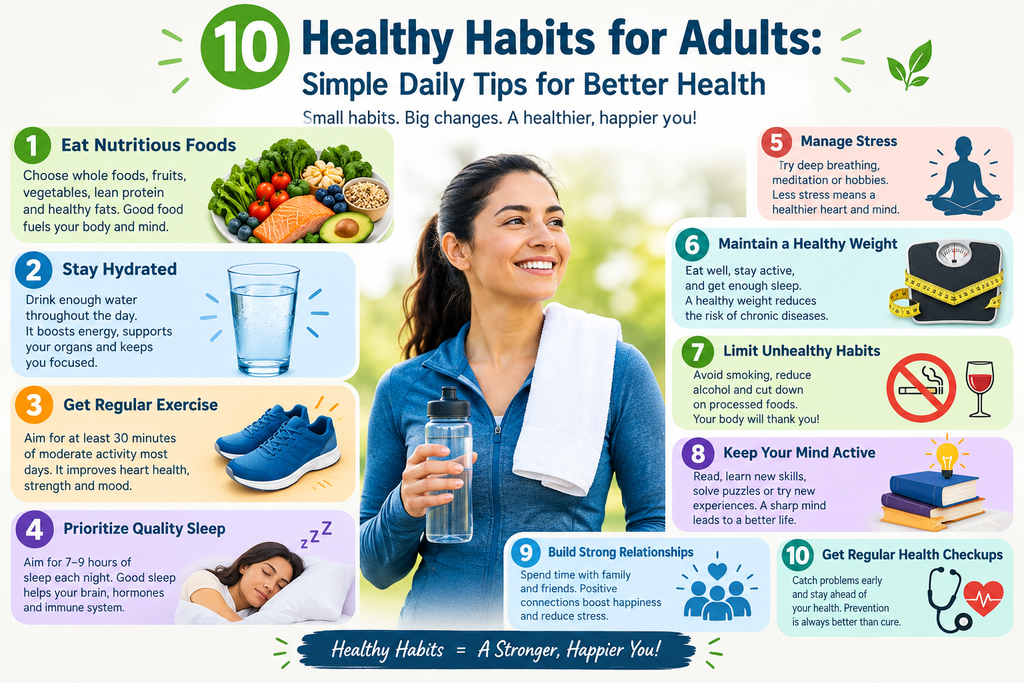
Building a healthier lifestyle does not require an extreme diet, exhausting workouts, or completely changing your daily routine overnight. For most people, lasting progress comes from small habits that can be repeated consistently.
Your daily choices around food, physical activity, sleep, tobacco, stress, and preventive healthcare can influence your overall well-being. The American Heart Association’s Life’s Essential 8 framework includes healthy eating, physical activity, avoiding nicotine, healthy sleep, weight management, cholesterol, blood sugar, and blood pressure as important areas of cardiovascular health.
If you are looking for practical healthy habits for adults, start with changes that fit your lifestyle rather than trying to become perfect immediately.
What Are Healthy Habits?
Healthy habits are repeated behaviors that can support physical and mental well-being over time.
Examples include eating a varied diet, moving your body regularly, getting adequate sleep, drinking water, avoiding tobacco, managing stress, and keeping up with appropriate medical care.
The goal is not to follow a perfect routine every day. Instead, focus on making healthier choices more often and returning to your routine when life gets in the way.
1. Build Meals Around Nutritious Foods
One of the most important healthy eating habits is to focus on the overall quality of your diet rather than searching for one “superfood.”
The American Heart Association recommends an eating pattern that includes vegetables, fruits, whole grains, beans and legumes, nuts and seeds, plant-based proteins, and lean sources of animal protein. It also recommends limiting foods and drinks high in added sugars, sodium, saturated fat, and highly processed ingredients.
What Can a Balanced Plate Look Like?
A simple meal might include:
- Vegetables or a salad
- A source of protein
- Whole grains or another fiber-rich carbohydrate
- Fruit
- Water or another unsweetened beverage
You do not have to completely eliminate your favorite foods. Instead, consider how they fit into your overall eating pattern.
Reading Nutrition Facts labels can also help you compare products and identify foods with less sodium, added sugar, and saturated fat.
2. Make Physical Activity a Weekly Habit
Regular physical activity is another key part of a healthy lifestyle.
For adults, the American Heart Association recommends at least 150 minutes of moderate-intensity aerobic activity per week, or 75 minutes of vigorous activity, or a combination of the two. Adults should also include muscle-strengthening activities at least twice a week.
You do not have to complete all your activity in one session.
For example, you could:
- Walk for 30 minutes on five days
- Take the stairs when practical
- Ride a bicycle
- Go swimming
- Dance
- Garden
- Perform resistance exercises at home
- Take short walking breaks during the workday
Start at Your Current Fitness Level
If you have been inactive, begin gradually. Increasing your activity too quickly can make the routine difficult to maintain and may increase the risk of injury.
People with certain medical conditions should discuss an appropriate exercise plan with a healthcare professional.
3. Sit Less and Move More During the Day
A workout is important, but your entire day also matters.
If you work at a desk or spend many hours watching television, try adding short movement breaks. Stand up, walk around your home or office, stretch, or take a short walk.
The American Heart Association encourages adults to move more and avoid prolonged periods of inactivity.
A few minutes of movement may seem small, but creating regular opportunities to move can make an active lifestyle easier to maintain.
4. Make Sleep a Priority
Sleep is often overlooked when people try to improve their health.
The American Heart Association recommends that most adults aim for an average of 7–9 hours of sleep per night. Healthy sleep is included among its Life’s Essential 8 measures because sleep is important for heart and brain health.
Simple Healthy Sleep Habits
Try to:
- Go to bed and wake up at consistent times
- Create a relaxing bedtime routine
- Keep your bedroom comfortable and dark
- Reduce stimulating activities before bed
- Put your phone on do-not-disturb mode
- Give yourself enough time to sleep
If you regularly have trouble sleeping, or poor sleep is affecting your daytime functioning, speak with a healthcare professional.
5. Drink More Water and Limit Sugary Drinks
Water is an important part of everyday nutrition. Choosing water more often can also help reduce your intake of sugar-sweetened beverages.
Instead of automatically reaching for soda or another sweetened drink, consider water, sparkling water without added sugar, or an unsweetened beverage.
Your fluid needs can vary depending on your activity level, environment, diet, medications, and health conditions. People with certain medical conditions may have specific fluid recommendations, so individual medical advice should take priority.
6. Work Toward a Healthy Weight Without Extreme Diets
Weight management is not simply about eating as little as possible.
A sustainable approach combines nutritious food choices, regular physical activity, adequate sleep, and other lifestyle factors.
The American Heart Association includes weight management as one of its cardiovascular health factors alongside blood pressure, cholesterol, and blood glucose.
Avoid the “All or Nothing” Approach
Extreme diets may be difficult to maintain for long periods.
Instead, consider practical changes such as:
- Adding more vegetables to meals
- Choosing whole grains more often
- Eating adequate protein
- Reducing sugary beverages
- Controlling portions
- Preparing more meals at home
- Increasing physical activity
If you are trying to lose a significant amount of weight or have a medical condition, consider discussing your goals with a registered dietitian or healthcare professional.
7. Avoid Tobacco and Nicotine
Avoiding tobacco is one of the most important health choices an adult can make.
The American Heart Association includes quitting tobacco and avoiding nicotine exposure among its Life’s Essential 8 health behaviors.
If you smoke cigarettes, quitting can be challenging, but you do not have to do it without support. Talk with a healthcare professional about evidence-based smoking-cessation options.
Avoid replacing one unhealthy habit with another without understanding the risks and benefits of available cessation approaches.
8. Find Healthy Ways to Manage Stress
Stress is part of everyday life, but how you respond to it can influence your overall wellness.
Healthy strategies may include:
- Walking outdoors
- Exercising
- Deep-breathing exercises
- Meditation
- Spending time with supportive people
- Reading
- Listening to music
- Pursuing hobbies
- Maintaining a consistent sleep schedule
The American Heart Association describes overall healthy living as more than diet and exercise, also emphasizing sleep, stress management, mindfulness, and social connection.
If stress, anxiety, low mood, or another mental-health concern is persistent or interfering with daily life, consider speaking with a qualified healthcare professional.
9. Know Your Important Health Numbers
Healthy lifestyle habits are important, but preventive healthcare matters too.
Depending on your age, sex, family history, and individual risk factors, your healthcare professional may recommend monitoring things such as:
- Blood pressure
- Cholesterol
- Blood glucose
- Weight
- Other age-appropriate health measures
These factors are also included in the American Heart Association’s Life’s Essential 8 framework.
Do not wait for symptoms before discussing preventive care. Ask your healthcare professional which screenings and health checks are appropriate for you.
10. Create Habits You Can Actually Maintain
The healthiest routine is not necessarily the most complicated one. It is the one you can realistically continue.
Instead of making 10 major changes at once, choose one or two habits.
For example:
Week 1: Add a 20–30 minute walk several days a week.
Week 2: Add vegetables to one additional meal each day.
Week 3: Establish a consistent bedtime.
Week 4: Replace one sugary drink each day with water.
Once a habit becomes easier, consider adding another.
Why Consistency Matters
You will probably have days when your routine does not go as planned. Travel, work, family responsibilities, holidays, illness, and other circumstances can interrupt healthy habits.
That does not mean you have failed.
Return to your routine when you can and focus on your overall pattern rather than one difficult day.
A Simple Healthy Daily Routine for US Adults
Here is an example of how these daily healthy habits can fit into a normal schedule.
Morning
Start your day with water and a balanced breakfast if you prefer eating in the morning. Add some light movement or a short walk when possible.
During Work
If you have a desk job, take regular movement breaks. Keep water nearby and choose a balanced lunch that includes vegetables, protein, and a high-fiber carbohydrate.
Afternoon
A short walk can provide an opportunity to move after a long period of sitting. If you exercise after work, choose an activity appropriate for your fitness level.
Evening
Eat a balanced dinner and avoid making every meal overly restrictive. Spend some time relaxing and preparing for sleep.
Before Bed
Reduce stimulating activities, create a consistent bedtime routine, and give yourself enough time to achieve your sleep goal.
7 Healthy Habits You Can Start This Week
If you want a simple starting point, try these:
- Walk for 20–30 minutes on several days.
- Add a vegetable or fruit to more meals.
- Choose water instead of a sugary drink.
- Take movement breaks during long periods of sitting.
- Aim for 7–9 hours of sleep.
- Read Nutrition Facts labels when comparing packaged foods.
- Schedule appropriate preventive healthcare appointments.
You do not need to do everything perfectly. The purpose is to create a routine that supports your health over the long term.
Frequently Asked Questions About Healthy Habits
What are the most important healthy habits for adults?
Important habits include eating a nutritious diet, staying physically active, getting adequate sleep, avoiding tobacco, managing stress, maintaining a healthy weight, and keeping up with appropriate preventive healthcare.
How much exercise should adults get each week?
Adults should generally aim for at least 150 minutes of moderate-intensity aerobic activity or 75 minutes of vigorous activity each week, plus muscle-strengthening activity at least twice weekly.
How many hours of sleep do adults need?
Most adults should aim for an average of 7–9 hours of sleep each night. Individual needs can vary.
Can healthy habits help with weight management?
Healthy eating, physical activity, sleep, and other lifestyle behaviors can all play a role in maintaining a healthy weight. Weight goals should be individualized, particularly for people with medical conditions.
Do I need to follow a strict diet to be healthy?
No single diet is necessary for everyone. A healthy eating pattern can include a variety of nutritious foods while limiting excessive added sugar, sodium, saturated fat, and highly processed foods.
What is the easiest healthy habit to start?
Choose something simple that fits your current routine. For many people, taking regular walks, drinking water instead of sugary beverages, adding vegetables to meals, or establishing a consistent bedtime can be practical starting points.
When should I talk to a doctor?
Speak with a healthcare professional if you have persistent symptoms, significant health concerns, a chronic medical condition, or questions about starting a new exercise or nutrition program. Your individual health needs may require personalized recommendations.
Final Takeaway
Building a healthier lifestyle does not require perfection. Start with realistic healthy habits for adults that you can repeat consistently.
Eat a varied and nutritious diet, move regularly, spend less time sitting, prioritize sleep, avoid tobacco, manage stress, and keep up with appropriate healthcare. These habits work together rather than existing as isolated solutions.
Most importantly, give yourself time. A healthy lifestyle is a long-term process, not a one-week challenge.
Medical Disclaimer: This article is for general educational and informational purposes only. It is not a substitute for professional medical advice, diagnosis, or treatment. Always consult a qualified healthcare professional about your individual health needs, medications, medical conditions, nutrition, or exercise program.