
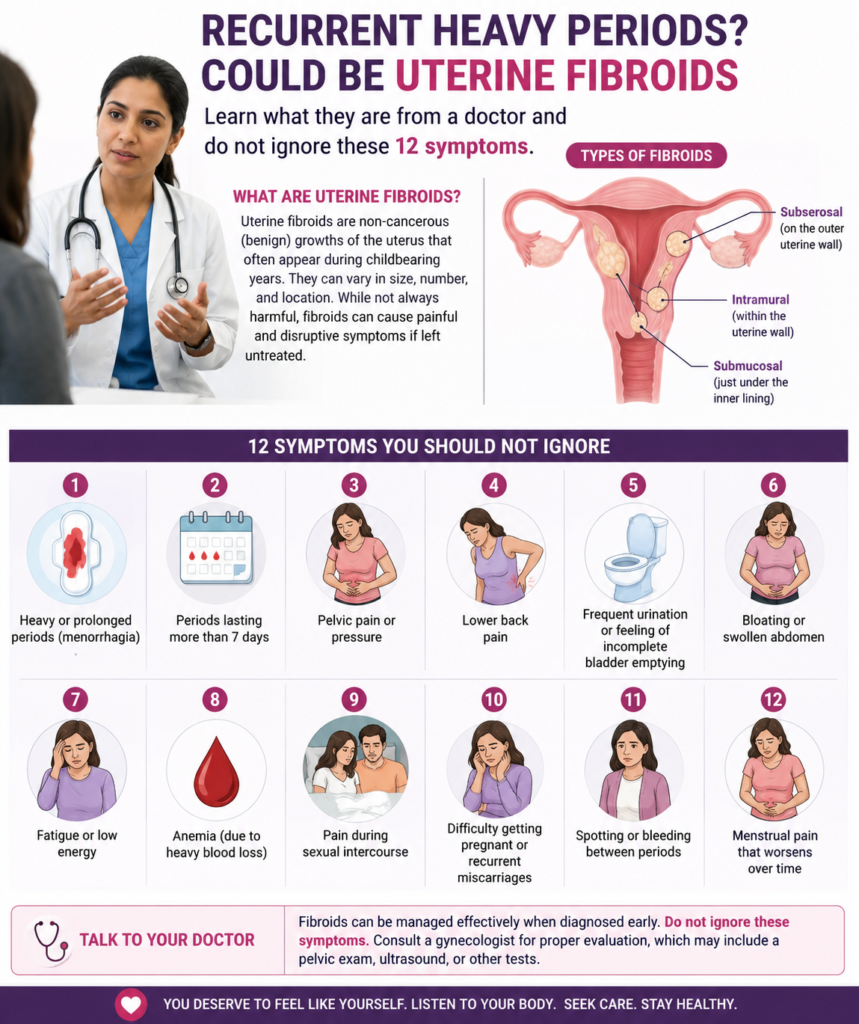
Recurrent heavy periods: Could be uterine fibroids; learn what they are from a doctor and do not ignore these 12 symptoms.
As the date for menstruation approaches, an unspoken fear begins to set in—the dread of heavy bleeding or having to endure that unbearable pain all over again. For many women, this date represents not just a time of the month, but a recurring source of anxiety.
These issues are often dismissed as ‘normal,’ but experiencing them repeatedly is not typical. In many cases, the underlying cause is uterine fibroids. Essentially, uterine fibroids are small growths or lumps that develop on the walls of the uterus.
Cases of uterine fibroids among women are on the rise due to changing lifestyles, obesity, and hormonal imbalances. According to research published in the Journal of Contemporary Clinical Practice (JCCP), approximately 7 to 8 out of every 10 women worldwide may develop fibroids by the age of 50. This implies that the majority of women are likely to develop fibroids at some point in their lives by this age.
What are uterine fibroids?
What are their symptoms and causes?
When is it necessary to see a doctor?
Question: What are fibroids?
Answer: Fibroids are non-cancerous growths that develop in or around the uterus. They are composed of muscle and fibrous tissue. They are also known as uterine myomas or leiomyomas. Fibroids can vary in size; some are as small as a pea, while others grow large enough to cause visible swelling or a noticeable bulge in the abdomen.
Question: How do fibroids develop?
Answer: The exact cause of fibroids is not yet fully understood, but doctors identify certain key factors.
The hormones estrogen and progesterone promote the growth of fibroids. This is why, after menopause (the time when menstrual periods cease and the body’s reproductive cycle ends), fibroids often shrink on their own as hormone levels drop. Fibroids grow at different rates in different women; some grow slowly, others rapidly, and some remain the same size for long periods.
Question: What are the different types of fibroids?
Answer: Fibroids are classified into four main types based on their location:
Intramural fibroids: These develop within the muscular wall of the uterus and are the most common type.
Submucosal fibroids: These grow just beneath the innermost lining of the uterus—the same lining responsible for menstruation.
Subserosal fibroids: These form on the outer surface of the uterus and grow outwards. If they become large, they can cause inflammation or a visible bulge in the lower abdomen and exert pressure on the bladder or intestines.
Pedunculated fibroids: These are less common. They are attached to the uterine wall by a slender stalk (known as a pedicle).
Question: What are the symptoms of fibroids?
Answer: Symptoms of fibroids vary from woman to woman. Often, they grow slowly, and initially, there may be no noticeable discomfort. However, as the fibroids increase in size, the body begins to show signs.
Question: When should one see a doctor?
Answer: It is important to consult a doctor if pelvic pain (pain in the lower abdomen) persists, periods are excessively heavy or painful, menstrual cycles are frequent, or there is a constant feeling of weakness. Seek immediate medical help in case of sudden, heavy bleeding or severe pelvic pain.
Question: What are the risk factors for fibroids?
Answer: The risk of developing fibroids increases under certain conditions. These conditions are related to hormonal balance and lifestyle.
Question: How are uterine fibroids treated?
Answer: Treatment depends on the size, number, location, and symptoms of the fibroids. For small, asymptomatic fibroids, regular monitoring is often the only recommendation. If necessary, options such as medication, hormonal therapy, or surgery are considered.
Question: Are fibroids always clearly visible on an ultrasound?
Answer: In most cases, fibroids are visible on a standard ultrasound. However, sometimes they are very small or located in a way that makes them difficult to see clearly. In such cases, doctors may recommend tests like a transvaginal ultrasound or an MRI.
Green vegetables and whole grains contain fiber, which aids in hormonal balance. Berries and turmeric possess anti-inflammatory properties. Flaxseeds and healthy fats support overall bodily health.
Some common questions and answers regarding fibroids
Question: Can fibroids cause anemia?
Answer: Yes, frequent or excessively heavy periods can lead to anemia. If symptoms of anemia appear alongside fibroids, consult a doctor immediately.
Question: Are fibroids cancerous?
Answer: No, in most cases, they are non-cancerous.
Question: Can fibroids be eliminated with medication?
Answer: Medications do not completely eliminate fibroids, but they can help control symptoms and slow down their growth.
Question: Can fibroids recur?
Answer: Yes, in some cases, new fibroids can develop even after treatment. Therefore, regular follow-ups are essential.
Uterine fibroids can be effectively managed through timely diagnosis, a balanced lifestyle, and medical advice.
btRJnTDTWNuROXDJgzzrtoU
Alright, folks, here’s the deal. 5pbet1 seems pretty straightforward so far. Just starting to browse and see what it all offers. I think its simplicity is why I like it so far. Check it out 5pbet1