
Hazardous chemicals in dishwashing liquid: Potential health risks, opt for chemical-free products, and follow these 11 precautions.
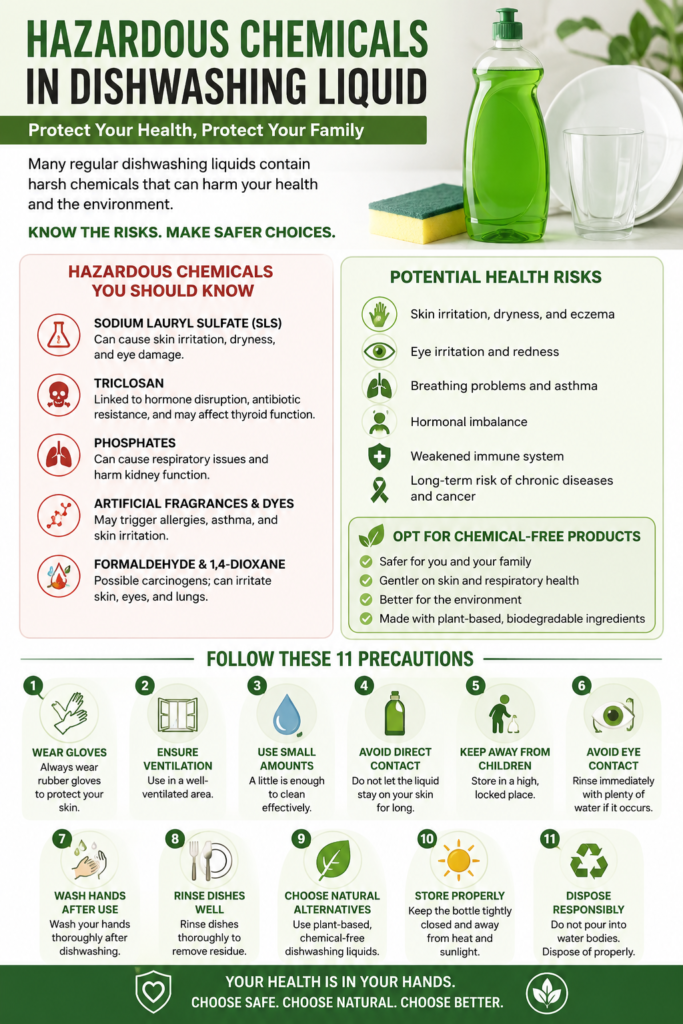
Most people use dishwashing liquid or soap to wash their dishes, feeling reassured that the utensils are clean and safe. However, have you ever considered that even clean, sparkling dishes could harm your health? In reality, chemical residues from certain dishwashing liquids can remain on the dishes and enter the body along with the food we eat.
A study published in The Journal of Allergy and Clinical Immunology (JACI) in February 2023 addressed this issue. It found that residues from rinse agents used in dishwashers can damage the protective lining of the intestines. Certain chemicals can also lead to hormonal imbalances and allergies.
What chemicals are found in dishwashing liquid?
What are the potential side effects?
What is the safe way to wash dishes?
Question- What is dishwashing liquid, and how does it work?
Answer- It is a cleaning product used to wash dishes. It effectively removes grease and grime stuck to the dishes. The surfactants present in it break down oil and dirt into tiny particles that wash away with water. Some liquids and soaps also contain enzymes and strong alkalis that help remove stubborn stains and accumulated grease.
Question- What chemicals might be found in dishwashing liquid?
Answer- They may contain surfactants, fragrances, preservatives, dyes, and antibacterial agents. Additionally, certain other chemicals may be present indirectly. These ingredients vary depending on the brand.
Question: Can minute particles of dishwashing soap remain on the dishes even after washing?
Answer: Yes, microscopic chemical residues can remain if too much liquid is used or if the dishes are not rinsed properly. These are invisible but can enter the body through food.
Question: How can these tiny particles of dishwashing soap harm our health?
Answer: These microscopic particles can enter the body along with food, potentially leading to various health issues.
Question: Dishwashing liquids contain artificial fragrances. Can inhaling them be harmful?
Answer: Yes, for some people, this can cause irritation in the nose and throat, sneezing, headaches, allergies, and respiratory issues. It can also aggravate asthma symptoms.
Question: For whom can the chemicals and artificial fragrances in dishwashing liquids be particularly hazardous?
Answer: The fragrances can be especially harmful to certain groups of people, such as:
Those with asthma or respiratory allergies.
Those with sensitive skin.
Those with skin-related conditions.
Those with hormonal issues.
Young children and the elderly.
Pregnant women.
Pets.
Question: Do all dishwashing liquids contain harmful chemicals, or are there safe alternatives available?
Answer: Not all dishwashing liquids contain the same chemicals. Some products have lower chemical content, and there are also homemade or DIY options available. Always read the label and choose products that contain human-safe ingredients.
Question: Is there a risk of inhaling chemicals when washing dishes in a dishwasher?
Answer: Yes, certain chemicals can be released into the air along with the steam from the dishwasher. This steam can be inhaled when opening the machine, potentially causing irritation or respiratory issues in some people.
Question: What is the safe way to wash dishes?
Answer: Keep the following points in mind:
Use a small amount of dishwashing liquid.
Rinse dishes thoroughly under clean, running water.
Avoid products with strong fragrances or high chemical content.
Opt for fragrance-free or low-chemical alternatives.
Wear gloves while washing dishes and ensure the kitchen is well-ventilated.
Wash your hands thoroughly with clean water after washing the dishes.
Use the correct amount of detergent and the appropriate setting when using a dishwasher.
Question: What factors should be considered when choosing a dishwashing liquid?
Answer: Keep a few key points in mind when buying dishwashing liquid from the market, such as:
Choose products that are free from phosphates, SLS/SLES, phthalates, and synthetic fragrances.
Opt for trusted brands and products that clearly list their ingredients.
Avoid liquids that produce excessive foam.
If possible, choose organic or plant-based liquids.
Read the label carefully before purchasing.
As a long time fan of classic and modern slots I can say this place nails the balance perfectly. Withdrawals are quick and the interface is super easy to navigate even for beginners. I keep coming back for the fair gameplay and honest environment. Happy spinning jp789slot