Can Selenium Prevent Aging: What This Mineral IsQuestion: Can selenium requirements be met through diet alone, or are supplements also necessary?
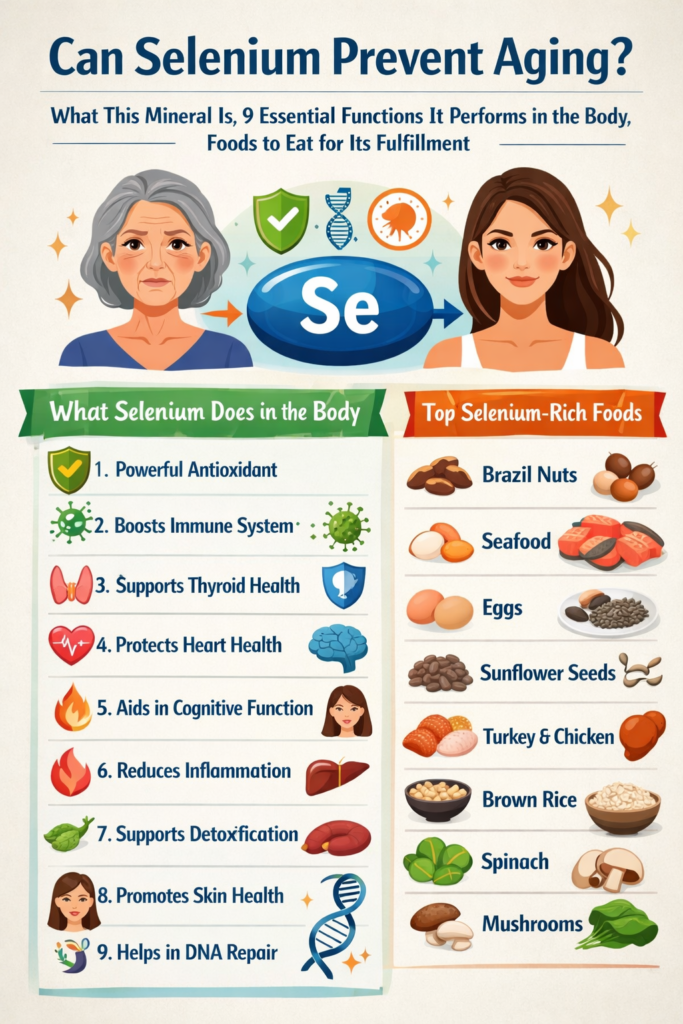
Answer: If you maintain a balanced diet, your requirements can be fully met. It is beneficial to include nuts, seeds, lentils, dairy products, and green leafy vegetables in your meals.
Supplements are typically required by individuals who have underlying health conditions. However, please keep in mind that taking supplements without a doctor’s advice can potentially be harmful., 9 Essential Functions It Performs in the Body, Foods to Eat for Its Fulfillment
Everyone desires to look beautiful and youthful forever. Who doesn’t want glowing skin and long, black hair? This vital mineral is essential for this purpose.
It is an anti-aging element, essential for hormonal balance, a strong immune system, and healthy cells. It also protects DNA. Its deficiency can increase the risk of oxidative stress, inflammation, and many serious diseases.
The body does not produce any minerals on its own; it cannot store them for long, except for a few, such as calcium and iron. Therefore, it is essential to include them in the daily diet. A balanced, diverse diet can fulfill this need.
So, today in Physical Health, we will learn about selenium. We will also learn about-
For which fundamental bodily functions is this mineral essential?
What adverse effects can result from its deficiency?
What foods should be consumed to ensure adequate selenium intake?
Question: What is selenium?
Answer: Selenium is a trace mineral. This means it is a mineral that the body requires in very small quantities. However, it is an essential mineral for maintaining good health.
Question: How essential is selenium for the body?
Answer: Selenium is an extremely vital micronutrient required for the body to function in a balanced manner.
It protects cells from oxidative stress (which is responsible for serious diseases such as cancer).
It strengthens the immune system.
It helps maintain hormonal balance.
Specifically, it aids in the production of thyroid hormones and keeps them active.
It reduces inflammation within the body.
It also assists in cellular repair and balanced growth.
Question: For which fundamental bodily functions is selenium essential?
Answer: Selenium is a crucial mineral for numerous fundamental bodily functions.
It helps maintain balanced levels of thyroid hormones, thereby ensuring the body remains energetic.
It aids in DNA synthesis and promotes proper cellular growth.
It is an essential mineral for reproductive health.
It helps keep the immune system strong.
It assists in the production of essential bodily proteins.
It helps eliminate damaged proteins from the body.
As a result, cells remain healthy, and the body functions more efficiently.
Question – What problems can arise from a deficiency of this mineral?
Answer – A deficiency can cause premature aging. It makes the skin dry and causes wrinkles. Hair becomes dry, lifeless, and turns white prematurely.
Question: Is this mineral truly an anti-aging nutrient? How does it work?
Answer: Yes, selenium is an anti-aging nutrient. It functions in the following ways:
It reduces the levels of free radicals generated within the body.
If free radical levels rise, cells can become damaged, causing signs of aging to appear prematurely.
It activates the antioxidant enzymes necessary to protect cells.
It helps reduce inflammation and shields the skin from damage caused by ultraviolet (UV) rays.
Question: Which diseases does selenium help reduce the risk of?
Answer: By protecting the body against oxidative stress and inflammation, this mineral can help lower the risk of certain diseases.
It strengthens the body’s ability to fight off diseases and infections.
It helps maintain thyroid hormone balance and reduces the risk of thyroid inflammation.
It can lower the risk of heart disease by protecting heart muscles and blood vessels from oxidative damage.
It prevents cellular damage by reducing oxidative stress and inflammation.
Selenium helps improve sperm quality and motility.
It helps preserve and protect cognitive function and memory.
It supports bone and joint health by reducing inflammation.
By protecting the skin from free radicals, it helps reduce the risk of wrinkles and hair weakness.
Selenium supports cellular repair processes.
Question: How much of this mineral does a healthy adult need daily?
Answer: A healthy adult requires approximately 55 micrograms of selenium per day.
During pregnancy, this requirement increases to about 60 micrograms, while breastfeeding women need to consume approximately 70 micrograms of selenium.
This amount is considered sufficient to maintain normal bodily functions, immunity, and hormonal balance. Consuming selenium in excessive quantities can be harmful.
According to Dr. Khaji Javed, consuming more than 400 micrograms of selenium daily can pose health risks; therefore, it should be consumed only in balanced amounts.
Question: Who is at a higher risk of selenium deficiency?
Answer: The risk of selenium deficiency is higher among people living in regions where the soil has a low selenium content. Crops grown in such areas also tend to have lower levels of selenium.
Individuals suffering from severe kidney disease who require dialysis may also face an increased risk of this deficiency.
Low selenium levels have also been observed in people affected by HIV.
Those who rely on a very limited range of foods for their diet are also more susceptible to selenium deficiency.
Question: Which foods should be included in one’s diet to ensure adequate intake?
Answer: A balanced diet generally provides the body with the necessary nutrients. Marine fish—such as tuna, sardines, and shrimp—are excellent sources. It is also found in eggs and chicken.
For vegetarians, whole grains, brown rice, lentils, beans, and dairy products (milk and yogurt) serve as good dietary options.
Question: Can selenium requirements be met through diet alone, or are supplements also necessary?
Answer: If you maintain a balanced diet, your requirements can be fully met. It is beneficial to include nuts, seeds, lentils, dairy products, and green leafy vegetables in your meals.
Supplements are typically required by individuals who have underlying health conditions. However, please keep in mind that taking selenium supplements without a doctor’s advice can potentially be harmful.