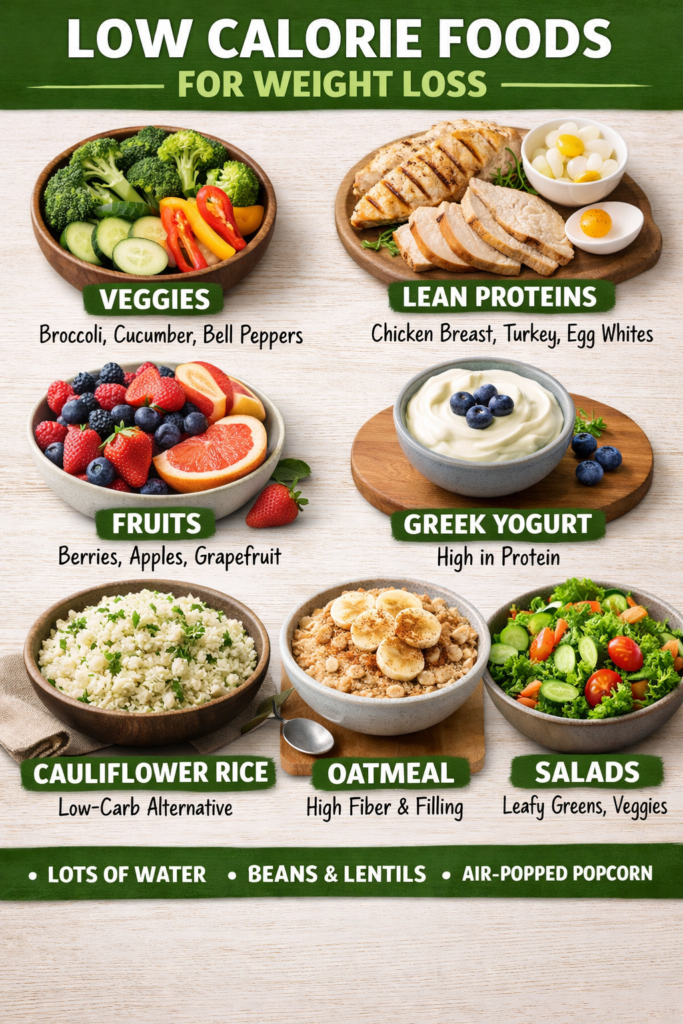
If you wish to lose weight in a healthy and sustainable manner, the most effective strategy is to incorporate low-calorie foods into your daily diet. Many people reduce their food intake drastically in the name of dieting; however, the correct approach is “smart eating”—that is, choosing foods that are low in calories but high in nutritional value.
In this detailed guide, we will explore what low-calorie foods are, which ones are the best choices, and how you can integrate them into your daily routine to achieve rapid fat loss.
🔥 What Are Low-Calorie Foods?
Low-calorie foods are those that contain minimal energy (calories) yet are rich in vitamins, minerals, fiber, and protein. These foods provide greater satiety with fewer calories, thereby helping you avoid overeating.
👉 The Golden Rule of Weight Loss:
Consume fewer calories, but maintain high nutritional intake.
When you consume low-calorie foods, you can easily create a calorie deficit—a prerequisite for effective fat loss.
⚖️ Why Low-Calorie Foods Are Important for Weight Loss
The fundamental concept behind weight loss is simple:
👉 You must burn more calories than you consume. Low-calorie foods help with this because:
You can eat larger quantities (without consuming excessive calories)
Hunger remains under control
Cravings are reduced
The body continues to receive essential nutrients
🥦 Top 20 Low-Calorie Foods for Weight Loss
🥒 1. Cucumber
Calories: ~16 per 100g
Over 90% water
Excellent for detox and hydration
🥬 2. Spinach
Calories: ~23
Rich in iron and fiber
Supports fat burning
🥦 3. Broccoli
Calories: ~34
High fiber → improves digestion
Helps reduce belly fat
🍎 4. Apple
Calories: ~52
Fiber-rich → controls appetite
A healthy snack option
🥕 5. Carrots
Calories: ~41
High in Vitamin A
A low-calorie, crunchy snack
🍉 6. Watermelon
Calories: ~30
A hydrating fruit
Reduces sweet cravings
🍓 7. Strawberries
Calories: ~32
High in antioxidants
Good for skin health and metabolism
🥚 8. Boiled Eggs
Calories: ~70 per egg
High protein → boosts fat loss
Helps prevent muscle loss
🥣 9. Oats
Calories: ~68 (cooked)
Slow digestion → provides long-lasting energy
Ideal for breakfast
🥛 10. Greek Yogurt
Calories: ~59
Protein + probiotics
Improves gut health
🍗 11. Chicken Breast
Calories: ~165
A lean protein source
Supports muscle building + fat loss
🐟 12. Fish (Salmon/Tuna)
Calories: ~150–200
Rich in Omega-3 fatty acids
Improves metabolism
🍲 13. Vegetable Soup
Calories: Very low
Filling + hydrating
Perfect for dinner
🍿 14. Air-Popped Popcorn
Calories: ~30 per cup
A low-calorie snack
Fiber-rich
🥗 15. Lettuce
Calories: ~15
A salad base
Excellent for “volume eating” (eating large portions)
🍄 16. Mushrooms
Calories: ~22
Low-carb + low-calorie Fat
Weight loss friendly
🫘 17. Lentils (Dal)
Calories: Moderate, yet filling
Protein + Fiber
Hunger control
🍠 18. Sweet Potatoes
Calories: ~86
Healthy carbs
Keeps energy levels stable
🥤 19. Green Tea
Calories: ~0
Fat-burning properties
Metabolism boost
🍋 20. Lemon Water
Calories: Very low
Detox support
Improves digestion
🍽️ How to Include Low-Calorie Foods in Your Daily Diet
If you incorporate low-calorie foods correctly, weight loss is possible without starving yourself.
🥣 Breakfast
Oats + fruits + Greek yogurt
Boiled eggs + green tea
🍛 Lunch
Grilled chicken + salad
Dal + vegetables + roti
🍎 Snacks
Apple / carrot / cucumber
Popcorn (without butter)
🌙 Dinner
Vegetable soup
Light salad + protein
⚡ Benefits of Low-Calorie Foods
✅ 1. Faster Weight Loss
With lower calorie intake, the body burns stored fat.
✅ 2. Better Digestion
Fiber-rich foods improve digestion.
✅ 3. Hunger Control
You can consume fewer calories even while eating larger portions.
✅ 4. Improved Metabolism
Healthy foods keep the metabolism active.
✅ 5. Sustainable Results
Yields long-term results rather than those from crash dieting.
Creating a 2,000-word comprehensive guide on low-calorie foods for weight loss requires a deep dive into the science of satiety, nutrient density, and practical application. Below is an extensive breakdown structured to help you understand not just what to eat, but why these foods work to accelerate fat loss.
The Ultimate Guide to Low-Calorie Foods for Sustainable Weight Loss
Weight loss is often misunderstood as a journey of deprivation. However, the most successful weight loss strategies rely on Volume Eating—the practice of consuming large quantities of food with low energy density. This allows you to stay physically full while maintaining a calorie deficit.
I. The Science of Satiety: Why Certain Foods Kill Hunger
To lose weight without feeling miserable, you must prioritize foods that trigger your body’s fullness signals. This involves three key factors:
- Water Content: Foods like cucumbers and melons add weight and volume without adding calories.
- Dietary Fiber: Fiber slows gastric emptying, meaning food stays in your stomach longer.
- Protein Density: Protein is the most thermogenic macronutrient, requiring more energy to digest and significantly suppressing the “hunger hormone,” ghrelin.
II. High-Volume Vegetables (The “Unlimited” Category)
Vegetables should make up at least 50% of your plate. Most non-starchy vegetables contain between 15–30 calories per 100 grams.
1. Leafy Greens (Spinach, Kale, Arugula, Swiss Chard)
Leafy greens are the lowest calorie-density foods on earth. You can eat an entire bowl of spinach for less than 20 calories. They are rich in Vitamin K, Vitamin C, and nitrates, which can improve blood flow and exercise performance.
2. Cruciferous Vegetables (Broccoli, Cauliflower, Brussels Sprouts)
These are “bulky” vegetables. Cauliflower, in particular, has become a weight-loss staple because it can be “transformed” into low-calorie versions of high-calorie foods:
- Cauliflower Rice: 25 calories per cup vs. 200 calories for white rice.
- Cauliflower Mash: A great alternative to buttery mashed potatoes.
3. Zucchini and Summer Squash
Zucchini is roughly 95% water. “Zoodles” (zucchini noodles) allow you to enjoy the volume of a pasta dish at 1/10th of the calories.
4. Cucumbers and Celery
These are the ultimate “crunch” snacks. Celery is famous for its high thermic effect, meaning your body burns a significant portion of its calories just trying to break down its tough cellulose fibers.
III. Lean Proteins: The Metabolic Boosters
Protein is essential for preserving lean muscle mass while losing body fat. Without adequate protein, your metabolism may slow down during weight loss.
5. Egg Whites
While whole eggs are nutritious, the yolk contains all the fat and most of the calories. An egg white has only about 17 calories and 4g of protein. You can create massive, filling omelets by using one whole egg mixed with a cup of liquid egg whites.
6. White Fish (Cod, Tilapia, Flounder)
White fish is one of the leanest protein sources available. A 150g serving of cod provides about 30g of protein for only 120–130 calories. It is significantly lower in calories than fatty fish like salmon or mackerel.
7. Chicken Breast (Skinless)
The staple of fitness enthusiasts for a reason. Chicken breast is versatile and offers a high protein-to-calorie ratio. To keep it low-calorie, avoid frying and use dry rubs or lemon juice instead of oil-based marinades.
8. Non-Fat Greek Yogurt and Cottage Cheese
These dairy options are high in casein protein, which is slow-digesting. Eating Greek yogurt before bed can help prevent late-night hunger and support muscle recovery overnight.
IV. Fruits: Nature’s Low-Calorie Candy
Many people avoid fruit due to sugar, but the fiber in whole fruit prevents insulin spikes and keeps calories low.
9. Berries (Strawberries, Raspberries, Blackberries)
Berries are the highest-fiber fruits. Strawberries are particularly low-calorie; you can eat a whole pound of strawberries for about 150 calories.
10. Watermelon and Cantaloupe
Melons have the highest water content of all fruits. They provide huge volume and hydration, making them the perfect dessert replacement for those with a sweet tooth.
11. Apples and Pears
These contain pectin, a type of soluble fiber that has been shown to increase satiety. Eating an apple before a meal can naturally reduce the amount of food you consume during that meal.
V. Smart Starches and Grains
You don’t need to go “Zero Carb” to lose weight. You just need to choose carbs that are high in fiber.
12. Potatoes (Boiled or Baked)
Surprisingly, boiled potatoes rank #1 on the Satiety Index. They are more filling than brown rice or pasta. The key is to avoid adding butter, oil, or sour cream.
13. Oats and Oatmeal
Oats absorb water and expand. A small amount of dry oats becomes a large, heavy bowl of porridge that sticks to your ribs for hours.
14. Legumes (Lentils, Black Beans, Chickpeas)
Legumes are a unique combination of protein and fiber. While they are higher in calories than green vegetables, their ability to keep you full for 4–6 hours makes them a powerful weight-loss tool.
VI. Secret Weapons: The “Zero-Calorie” Fillers
These items help you feel like you are eating more without adding to your daily total.
15. Shirataki (Konjac) Noodles
Made from the konjac root, these noodles are almost 97% water and 3% fiber. A serving has about 5–10 calories. They absorb the flavor of whatever sauce you cook them in.
16. Air-Popped Popcorn
Popcorn is a whole grain. When popped with air (not oil), it is incredibly high in volume. You can snack on 3 large cups of popcorn for under 100 calories.