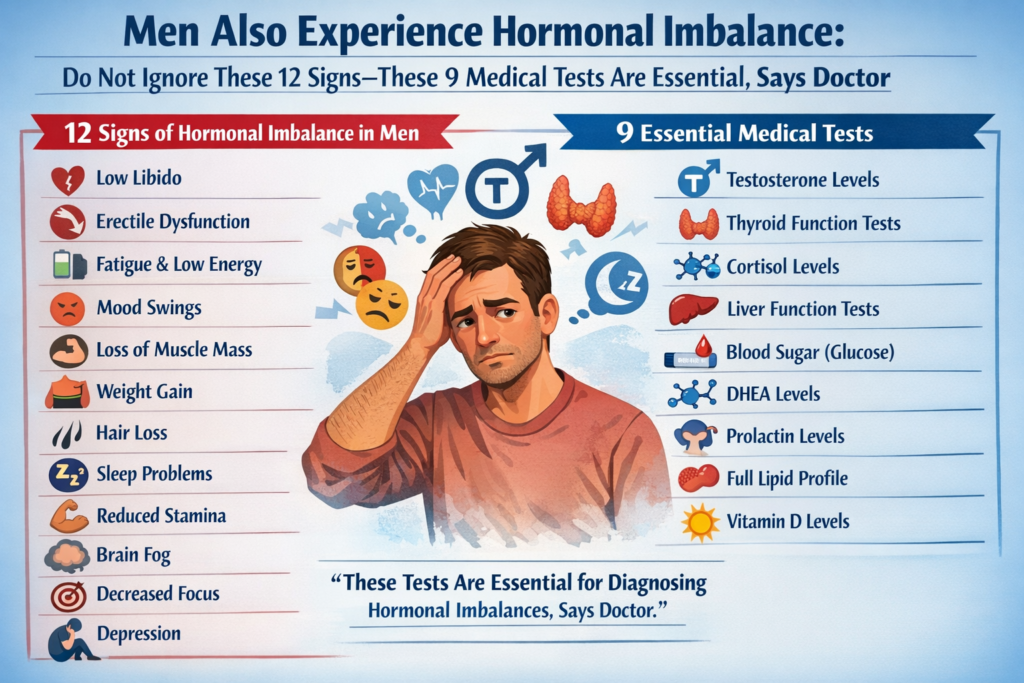
Men Also Experience Hormonal Imbalance: Do Not Ignore These 12 Signs—These 9 Medical Tests Are Essential, Says Doctor
It is common for women to experience mood swings, fatigue, and low spirits during menstruation or menopause. However, very few people are aware that men also face these issues. Our hormones are responsible for all of these occurrences. The only difference is that, in men, these changes are often overlooked.
Hormones regulate every vital bodily function; therefore, maintaining their balance is essential. This balance has a direct impact on both physical and mental health.
Consequently, in today’s discussion on physical health, we will address “hormonal imbalance” in men. We will also explore:
What are the symptoms of hormonal imbalance in men?
Which tests are required to diagnose it?
Question: What is hormonal imbalance?
Answer: Hormonal imbalance refers to a condition in which the levels of hormones in the body become either lower or higher than normal. Hormones are essential for many vital bodily functions; they regulate metabolism, mood, sleep, fertility, and growth. When an imbalance occurs, symptoms such as fatigue, weight fluctuations, acne, or mood swings may manifest.
Typically, these changes are observed as a result of a poor lifestyle, stress, thyroid issues, or the natural aging process.
Question: Women often experience hormonal imbalances in their bodies due to menstruation and menopause. But can men also experience hormonal imbalances, just like women?
Answer: Yes, although the causes and symptoms may differ between the two. The primary hormone in men is testosterone, levels of which can decline due to aging, stress, a poor lifestyle, obesity, or certain medical conditions.
This can manifest in symptoms such as fatigue, muscle loss, low sex drive, mood swings, and sleep disturbances.
Question: Which are the dominant hormones in the male body that are susceptible to imbalance?
Answer: The primary dominant hormone in the male body is testosterone, which is crucial for maintaining muscle and bone strength. It also regulates sex drive and sperm production. Additionally:
‘Insulin’ — regulates blood sugar levels.
‘Thyroid hormones’ — regulate metabolism.
‘Cortisol’ — helps the body process stress.
‘Growth hormones’ — play a vital role in physical development.
An imbalance in these hormones can lead to symptoms such as fatigue, weight fluctuations, mood swings, weakness, sleep deprivation, and issues related to sexual health. Maintaining a healthy lifestyle and undergoing timely medical check-ups can help keep these hormones in balance.
Question: What signs indicate that a man is experiencing a hormonal imbalance?
Answer: In men, hormonal imbalances often manifest through symptoms such as fatigue and mood swings.
Question: If someone experiences persistent fatigue, could this be a sign of a hormonal imbalance?
Answer: Yes, persistent fatigue can indeed be a sign of a hormonal imbalance, though it is not the only possible cause. Testosterone, thyroid hormones, and cortisol (the stress hormone) regulate our energy levels, metabolism, and sleep patterns.
An imbalance in these hormones can lead to feelings of fatigue. However, other factors such as anemia, lack of sleep, stress, or a poor diet can also be contributing causes. Therefore, if fatigue persists for an extended period and is accompanied by other symptoms, it is essential to undergo a blood test to identify the underlying cause.
Question: What is the relationship between mood swings, anger, and hormonal imbalance?
Answer: Mood swings and anger can also be linked to hormonal imbalances, as hormones play a crucial role in regulating the brain’s chemical signals and emotions. Disruptions in testosterone, cortisol, or thyroid hormone levels can lead to increased irritability, anger, or restlessness.
In particular, persistently elevated levels of cortisol can result in mood instability. Furthermore, lack of sleep and stress can also impact hormone levels, thereby exacerbating these issues. Therefore, if such symptoms persist, it is important to make lifestyle adjustments and, if necessary, undergo a medical evaluation.
Question: Is it normal for testosterone levels to decline with age? What physical signs indicate a deficiency of this hormone? What types of health problems can arise from this deficiency?
Answer: Yes, a gradual decline in testosterone levels as one ages is a normal biological process. This phenomenon is referred to as ‘andropause.’ Typically, a decline in levels after the age of 30 or 40 is considered normal. A deficiency in this hormone manifests through specific physical signs. Such as:
Fatigue
Muscle weakness
Weight gain
Low sex drive
Erection problems
Mood swings
Sleep disturbances
If the deficiency persists for a prolonged period, it can lead to complications such as weakened bones (osteoporosis), a slowed metabolism, and adverse effects on heart health. However, these issues can be managed through a proper lifestyle and timely medical check-ups.
Question: What is the relationship between hormonal imbalance and issues like waist fat (belly fat) and muscle loss?
Answer: There is a deep connection between them. Testosterone aids in building muscle and controlling body fat, whereas insulin and cortisol influence fat storage. When testosterone levels drop, muscle mass begins to diminish, while body fat—particularly around the abdominal area—starts to increase.
Conversely, elevated cortisol levels and insulin resistance also contribute to an increase in waist fat. This condition slows down the body’s metabolism, making it significantly more difficult to lose weight. Therefore, maintaining a balanced diet, engaging in regular exercise, and managing stress are essential for preserving hormonal balance.
Question: Can stress also disrupt hormonal balance?
Answer: Yes, stress can indeed disrupt hormonal balance. In stressful situations, the body begins to produce excessive amounts of cortisol. Prolonged exposure to high cortisol levels can negatively impact the balance of other hormones, such as testosterone, insulin, and thyroid hormones.
Question: When should one undergo a hormonal test? Which specific blood tests are required for this purpose?
Answer: You should consider getting a hormonal test if you observe any of the following signs or symptoms:
Persistent fatigue
Unexplained changes in body weight
Frequent mood swings
Sleep disturbances or insomnia
A decline in sex drive
Thyroid-related issues
Diabetes Typically, a blood test includes an assessment of the thyroid profile (TSH, T3, T4), testosterone, cortisol, and insulin. Doctors may order these tests based on the patient’s symptoms and specific requirements.
Question: For which symptoms is hormone therapy necessary?
Answer: When might hormone therapy be required?
Persistent symptoms of low testosterone (fatigue, low sex drive, weakness).
Erection problems and fertility issues.
Severe mood swings or depression.
Deficiency or excess of thyroid hormones.
Muscle loss and bone weakness (osteoporosis).
Sudden weight gain or loss.
Chronic, severe sleep problems.
Abnormally low or high hormone levels detected in blood tests.
Question: Is there a connection between hormonal imbalance and our lifestyle?
Answer: Yes, hormonal imbalance has a direct link to lifestyle:
A poor diet affects insulin levels and metabolism.
Lack of sleep disrupts cortisol and testosterone levels.
Chronic stress exacerbates hormonal imbalances.
Lack of exercise slows down metabolism.
Excessive alcohol consumption and smoking affect hormone levels.
Obesity is a contributing factor to various hormonal disorders.
Question: What lifestyle changes should be made to maintain hormonal balance in the body?
Answer: Making certain lifestyle adjustments is essential for maintaining hormonal balance:
Consume a balanced diet; include protein, healthy fats, and fiber.
Engage in 30–45 minutes of daily exercise or walking.
Ensure you get 7–8 hours of adequate, quality sleep every night.
Practice meditation or yoga to reduce stress.
Avoid excessive sugar and processed foods.
Quit alcohol and smoking.
Keep your body weight under control.
Drink sufficient water to stay hydrated.
Undergo regular health checkups and necessary medical tests.