How to Improve Eyesight: Perform These 8 Eye Exercises Regularly, Include These Healthy Foods in Your Diet, and Avoid These 8 Mistakes.
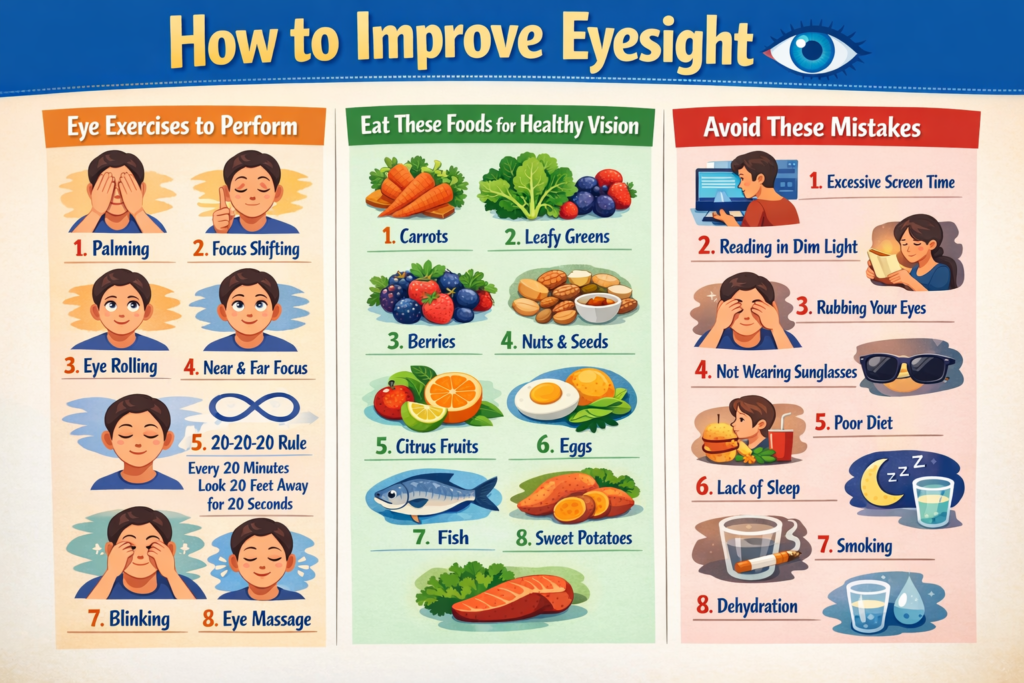
In today’s world, mobile phones, laptops, and televisions have become an integral part of our lives. These devices have become so dominant in our daily existence that we often fail to get adequate sleep. This has a direct impact on our eyes. Consequently, eyesight is deteriorating.
While weakening vision is a common occurrence as one ages, this issue is a matter of concern among children and young adults. This raises the question: can eyesight be restored? Is there a natural way to achieve this?
Therefore, today we will discuss ‘Vision Health.’ We will also explore:
Which exercises help improve eyesight?
Which habits or mistakes should be avoided to maintain good vision?
Question: It is natural for eyesight to deteriorate with age. However, apart from aging, can a poor lifestyle and bad habits also lead to weakened eyesight?
Answer: In addition to aging, a poor lifestyle also impacts eyesight. For instance:
Nutritional deficiencies (particularly of Vitamins A, C, and Omega-3) can lead to weakened vision.
Prolonged exposure to mobile, computer, or TV screens increases strain on the eyes.
Lack of adequate sleep and persistent eye fatigue can also cause damage.
Smoking, as well as exposure to dust, smoke, and harsh lighting, can have an adverse effect on eye health.
Reading or performing intricate tasks in dim lighting can weaken eyesight.
Viewing screens with bright illumination (such as TVs, mobile phones, iPads, or laptops) in a dark room can also impair vision.
All these detrimental habits can collectively lead to weakened eyesight.
Question: Is it possible to actually improve one’s eyesight?
Answer: While it is not possible to completely restore eyesight, it can certainly be improved. A healthy and balanced diet supports eye health. Furthermore, maintaining a proper lifestyle can help preserve good vision over the long term.
Question: What steps should be taken to improve eyesight?
Answer: The most important step is to adopt a healthy lifestyle, such as:
Include foods rich in vitamins and minerals—such as carrots, spinach, broccoli, and citrus fruits—in your diet.
Avoid staring at mobile phones or laptops continuously for extended periods; take regular breaks to rest your eyes.
Wear sunglasses with UV (ultraviolet) protection when stepping out in the sun, as they shield your eyes from potential damage.
Engage in regular physical exercise and maintain a healthy body weight.
Keep diabetes under control.
Undergo periodic eye check-ups.
Question: Which exercises should be performed to improve eyesight?
Answer: Performing eye exercises helps relax the eye muscles and reduces strain.
Regular breaks and eye exercises are beneficial for individuals who spend long periods looking at screens.
“Palming” (resting the palms over the eyes) provides relaxation to the eyes and alleviates fatigue.
Blinking exercises (rapidly blinking the eyelids) help maintain moisture in the eyes and reduce dryness.
Exercises involving shifting focus help improve the eyes’ ability to focus.
While these exercises may not fully restore eyesight, they certainly help reduce eye strain and fatigue.
Question: What kind of diet should we follow to improve our eyesight?
Answer: Vitamins A, C, and E, along with zinc and omega-3 fatty acids, are extremely important for eye health. Let’s understand this through the following key points:
Vitamin A keeps the retina healthy, thereby ensuring clear vision.
Antioxidants protect the eyes from age-related issues.
Nutrients such as lutein and zeaxanthin shield the retina from damage caused by blue light.
Incorporating green vegetables, colorful fruits, nuts, and healthy fats into your daily diet is beneficial.
A balanced and nutritious diet can help maintain good eyesight over the long term.
Question: Which vitamin deficiencies lead to weakened eyesight? How can these vitamins be incorporated into one’s diet?
Answer: Several vitamins are essential for this purpose:
A deficiency in Vitamin A can lead to conditions such as ‘night blindness’ and ‘dry eyes.’ To address this, consume carrots, sweet potatoes, spinach, and pumpkin.
A Vitamin C deficiency can increase oxidative damage within the eyes. To counter this, include oranges, Indian gooseberry (Amla), lemons, and strawberries in your diet.
A Vitamin E deficiency can result in damage to the retinal cells. Almonds, sunflower seeds, and peanuts are excellent sources for obtaining this vitamin.
In cases of Zinc deficiency, Vitamin A is unable to reach the retina effectively. To remedy this, consume pumpkin seeds, various types of lentils, and coarse grains.
Question: Is it advisable to take supplements to improve eyesight?
Answer: If your diet is balanced, supplements are generally not required. However, in certain instances, a doctor may recommend taking supplements to address specific vitamin and mineral deficiencies. But remember:
Supplements are beneficial only when there is an existing eye condition or a nutritional deficiency.
Taking supplements without a doctor’s advice can potentially be harmful.
Question: Apart from dietary adjustments, what other lifestyle changes should be made to maintain healthy eyes? What mistakes should be avoided?
Answer: Implement the following essential lifestyle changes:
Avoid staring at screens for prolonged periods; taking breaks during work is crucial for eye health.
Ensure you get a full 8 hours of sleep every night, as a lack of sleep can lead to increased eye fatigue and dryness.
Wear sunglasses with UV protection when exposed to sunlight.
Avoid smoking, as it can increase the risk of developing cataracts and other eye diseases.
Refrain from rubbing your eyes frequently, as this increases the risk of infection.
Pay close attention to the proper hygiene and cleaning of contact lenses. Dirty lenses can cause infections.
Get regular eye check-ups so that any problems can be detected in time.
Common Questions and Answers Regarding Eyesight
Question: Which diseases can lead to weakened eyesight?
Answer: Diabetes and high blood pressure can damage the nerves and retina of the eyes. If these conditions are not treated in a timely manner, or if regular eye check-ups are neglected, eyesight may deteriorate.
Question: Does wearing glasses make the eyes weaker?
Answer: Wearing glasses does not weaken the eyes; rather, it helps you see clearly. However, wearing glasses with an incorrect prescription—or failing to wear glasses when they are needed—places excessive strain on the eyes. This can potentially lead to weakened eyesight.
Question: Can wearing contact lenses cause eyesight to deteriorate?
Answer: Generally, contact lenses—much like glasses—help you see clearly. However, if the lenses are not kept clean, they can lead to eye infections and irritation.
Question: Can genetic factors cause eyesight to weaken?
Answer: Conditions such as glaucoma or macular degeneration can be genetic. Therefore, if anyone in your family suffers from such a condition, regular eye check-ups are essential.