
Physical Health: Increased Risk of Kidney Stones in Summer—Learn the Causes from a Doctor, Who Is Most at Risk, and 12 Essential Precautions for Prevention.
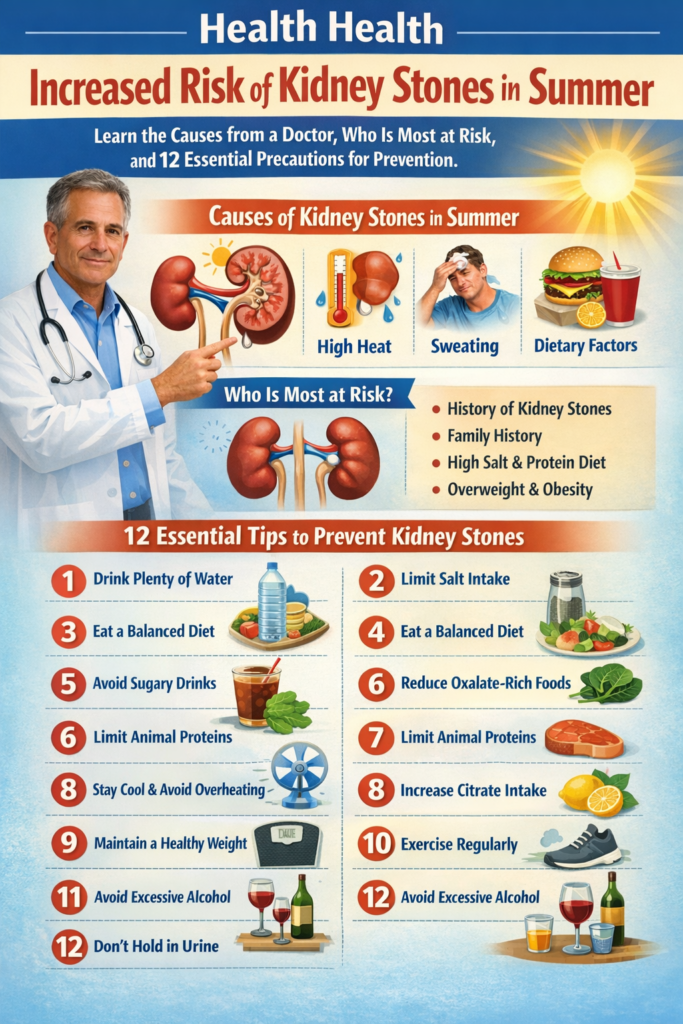
According to the Asian Institute of Nephrology and Urology (AINU), cases of kidney stones increase during the summer season. Rising temperatures in the summer heighten the risk of dehydration. Consequently, crystals of calcium and other minerals accumulate in the kidneys and eventually transform into stones.
According to a report by the National Center for Biotechnology Information, more than 12% of people in India suffer from kidney stones.
We will discuss kidney stones and also explore:
Why does the risk of kidney stones increase during the summer?
What steps can be taken to prevent them?
Question: Does the risk of kidney stones increase during the summer?
Answer: Yes, the risk of developing kidney stones can indeed increase during the summer months. Consider the following points:
During the summer, the body loses a significant amount of water through perspiration. Failure to consume adequate fluids can lead to dehydration.
When the body lacks sufficient water, the concentration of minerals—such as calcium and oxalate—in the urine increases. These minerals bind together to form tiny crystals, which eventually develop into kidney stones.
Question: When do kidney stones form, and what is their connection to the weather?
Answer: Crystals form when levels of calcium, oxalate, and uric acid rise in the urine; in the absence of sufficient water, these crystals fail to be flushed out of the body and subsequently solidify into stones. While there is no direct causal link to the weather itself, the risk increases during the summer due to the heightened likelihood of dehydration.
Question: What symptoms appear when one has kidney stones?
Answer: Kidney stones cause urinary problems. This can lead to severe pain in the lower back or abdomen.
Question: What acts of negligence increase the risk of kidney stones during the summer?
Answer: Minor lifestyle errors during the summer increase the risk of kidney stones. Neglecting the body’s need for water triggers ‘mineral saturation’ within the kidneys.Carelessness…
Question: Can dietary habits and lifestyle increase or decrease the risk of kidney stones?
Answer: Yes, an unhealthy lifestyle increases the risk of kidney stones, while healthy habits help reduce it.
Avoid excessive salt, processed foods, and high-protein diets.
Limit your intake of tea, coffee, and soft drinks.
Consume a diet rich in fruits, vegetables, and fiber.
Engage in regular physical activity and maintain a balanced diet.
Drink at least 8–10 glasses of water throughout the day.
Question: How much water is necessary daily to prevent kidney stones during the summer?
Answer: During the summer, the need for water increases due to excessive sweating. Generally, one should drink 2.5–3 liters of water daily. If you are sweating profusely or working outdoors, increase your water intake. Light yellow urine indicates adequate hydration, whereas dark-colored urine suggests that you need to drink more water.
Question: Is drinking just water sufficient, or are electrolytes also necessary?
Answer: Maintaining a balance of electrolytes (such as sodium and potassium) alongside water intake is essential. These minerals are lost through sweating. While water provides hydration, electrolytes help maintain the body’s balance. Coconut water, buttermilk, and lemon water are excellent sources of these electrolytes and help maintain fluid balance.
Question: What kind of diet should one follow to keep the kidneys healthy during the summer?
Answer: To keep the kidneys healthy during the summer, one should consume a light, balanced, and hydrating diet.
What to eat: Watermelon, muskmelon, cucumber, oranges, sweet limes (Mosambi), yogurt, and whole grains.
What to avoid: Excessive salt, junk food, processed foods, red meat, sugary items, and deep-fried foods.
Question: What steps can be taken to reduce the risk of kidney stones?
Answer: Certain foods and beverages can increase the risk of kidney stones; therefore, you should avoid them. In addition to this, it is also necessary to make some changes to your lifestyle.
Question: What precautions should be taken during the summer season by individuals with a history of kidney stones?
Answer: Individuals who have previously suffered from kidney stones face a higher risk of recurrence. Here is how to take care:
Maintain an adequate intake of water and fluids throughout the day.
Avoid consuming excessive salt and high-protein foods.
Continue taking prescribed medications as advised by your doctor.
Do not hold your urine for prolonged periods.
Consult a doctor immediately if you experience weakness, pain, or any urinary issues.
Question: What steps should be taken if you have kidney stones, and when should you consult a doctor?
Answer: Timely treatment is crucial in cases of kidney stones. Small stones may pass naturally through increased fluid intake, whereas medications are prescribed to manage pain, and diagnostic tests are conducted as needed. Consult a doctor immediately if you experience any of the following symptoms:
Severe pain in the lower back or abdomen.
Presence of blood in the urine.
Frequent vomiting or nausea.
Sharp pain during urination.
Reduced urine output or a complete inability to urinate.